Good Girl Gone Bad
Play Good Girl Gone Bad
Good Girl Gone Bad Screenshots










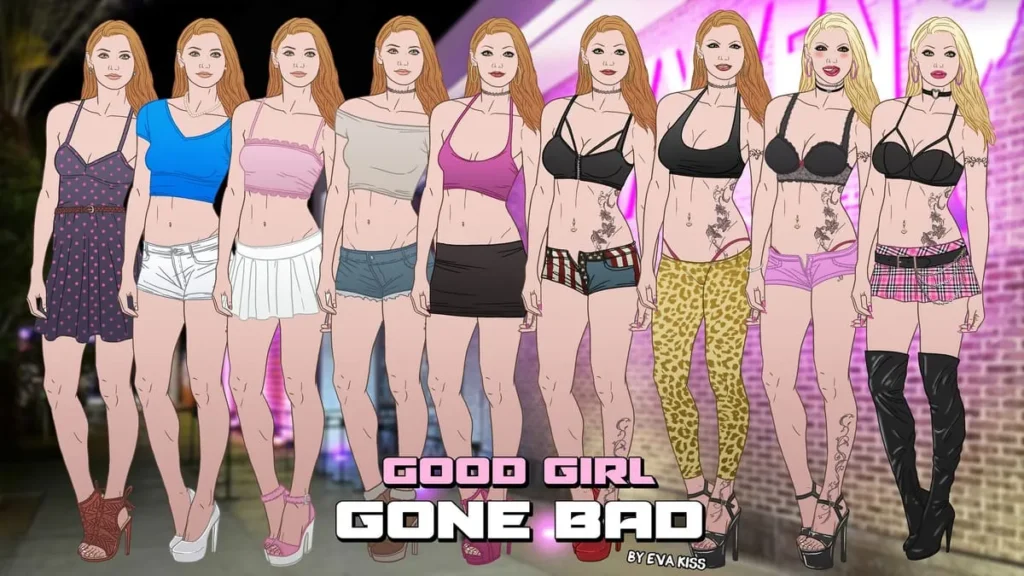




Good Girl Gone Bad review
Explore the Story, Features, and Player Choices in Good Girl Gone Bad
Good Girl Gone Bad is an adult-themed life simulation visual novel that immerses players in the complex story of Ashley, a young woman navigating a world full of challenging decisions and branching storylines. This game offers a unique blend of narrative depth and player agency, allowing you to shape Ashley’s path through various choices that influence her relationships and fate. Whether you’re new to the game or looking to deepen your understanding, this guide will walk you through its core features, gameplay mechanics, and strategies to get the most out of your experience.
Understanding Good Girl Gone Bad: Story and Gameplay Overview
Ever found yourself staring at a game menu, utterly bored with the same old hero’s journey? 🥱 You know the drill: save the world, get the girl, roll credits. What if you could play a game that wasn’t about saving anything, but about… exploring? Discovering who you could become if every polite rule you’ve ever followed was just an option, not a command? That’s the electrifying premise of Good Girl Gone Bad, a title that has redefined expectations in its genre.
This isn’t just another click-through adventure. It’s a raw, compelling, and deeply personal interactive story game that puts you in the driver’s seat of a life at a crossroads. If you’re curious about the buzz or ready to dive in, this guide is your backstage pass. We’ll break down everything from its gripping narrative to the mechanics that make your choices truly matter. Let’s get started! ✨
What is Good Girl Gone Bad?
At its heart, Good Girl Gone Bad is a masterclass in narrative freedom. It belongs to the category of visual novel adult game, but that label only scratches the surface. Think of it less as a “novel” you read and more as a life simulation you inhabit. The game follows Ashley, a young woman in her twenties who feels trapped in the monotony of a safe, predictable life with her steady boyfriend.
The core magic of this Good Girl Gone Bad game lies in its premise: what happens when “good” is no longer satisfying? The story begins with Ashley at a breaking point, and from there, it splinters into a kaleidoscope of possibilities. Will she cling to her comfortable relationship? Will she embrace rebellious new friends, explore her sexuality, chase career ambitions, or dabble in hedonistic pleasures? The game refuses to judge, instead offering a sandbox of human experience.
What sets it apart is its breathtaking hand-drawn art style. Every character, every scene, is rendered with a distinctive aesthetic that feels both intimate and vivid. This isn’t just window dressing; the art amplifies the emotional weight of every decision and encounter, making the world feel tangible and alive.
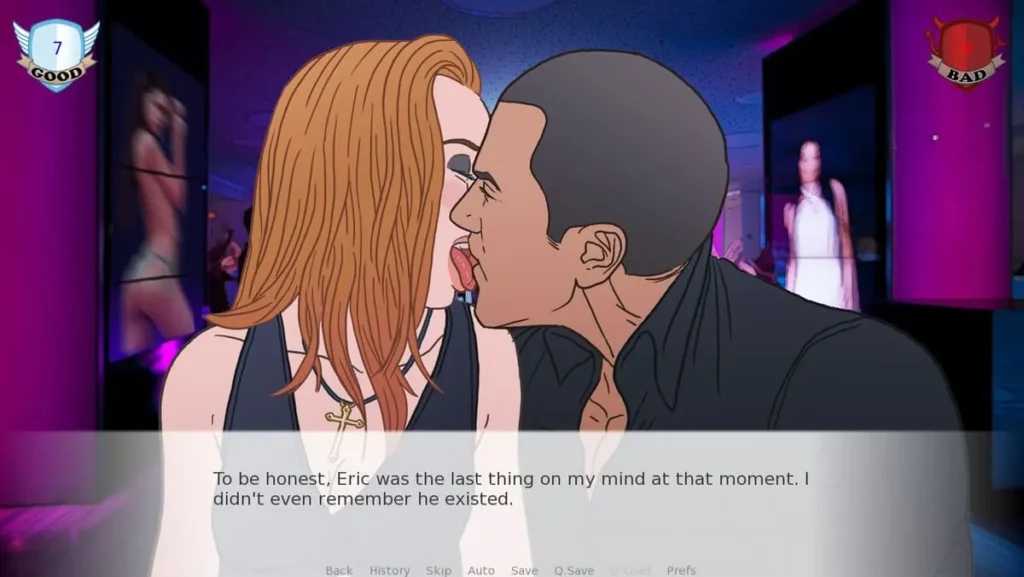
From my first playthrough, I was hooked not by a goal to “win,” but by a desire to see “what if?” I remember one rainy afternoon, I made a choice for Ashley to skip a dull family dinner and go to a club instead. That single decision unlocked an entire storyline with a character I didn’t even know existed, leading to some of the most memorable scenes in the game. It perfectly illustrates that in this world, there is no “right” path—only your path.
Core Gameplay Mechanics and Player Choices
So, how does this all work? The Good Girl Gone Bad gameplay is elegantly simple in execution but profound in impact. You navigate the story by making choices—constant, cascading choices that shape every aspect of Ashley’s world.
The Power of Dialogue and Decisions
Every conversation is a fork in the road. A seemingly innocent comment to a coworker can build a flirtatious alliance or create a bitter rival. Choosing what to wear for a date isn’t just cosmetic; it can influence how other characters perceive and interact with Ashley. The game tracks a hidden web of statistics—like Corruption, Relationship scores, and Reputation—that silently guide the narrative’s direction. You won’t see a morality meter, but you’ll feel its effects.
Managing a Web of Relationships
This is where the game shines as a life simulation. Ashley’s world is populated with a rich cast, and your choices determine who gets close, who gets hurt, and who becomes an enemy. You might be juggling the affections of her loyal boyfriend, a mysterious stranger, and a provocative best friend all at once. Neglecting one storyline to pursue another can have permanent consequences, making each playthrough uniquely personal.
Embracing the Branching Narrative
The crown jewel of the experience is its branching storylines Good Girl Gone Bad is famous for. We’re not talking about an A/B ending here. We’re talking about radically different plot arcs, character outcomes, and relationship conclusions based on your cumulative choices. One playthrough could see Ashley as a ambitious businesswoman, while another paints her as a free-spirited adventurer exploring her deepest desires.
Pro Tip: Don’t try to see everything in one go. The beauty of this interactive story game is in the replay. Save often, make bold choices, and embrace the chaos. Your “bad” choice might lead to the most fulfilling story arc.
The gameplay loop is immersive: read the situation, make your choice, and watch the beautifully illustrated consequences unfold. It’s a compelling cycle that asks one powerful question over and over: “Who do you want Ashley to be?”
Character Profiles and Story Arcs
The world of Good Girl Gone Bad characters is what gives the branching narrative its soul. These aren’t just archetypes; they feel like real people with their own desires, flaws, and evolving stories. Your interactions with them are the engine of the entire game.
Central to it all is the Ashley character Good Girl Gone Bad. She is your avatar, a blank canvas that you color with your decisions. Is she shy or confident? Faithful or adventurous? Ambitious or content? Her personality is entirely a reflection of your playstyle. Writing her story feels deeply personal because, in many ways, you’re not just guiding her—you’re discovering her alongside her.
The characters around her are equally complex. Let’s meet some of the key figures who will shape, challenge, and tempt Ashley on her journey.
| Character | Description & Role | How Your Choices Affect Their Arc |
|---|---|---|
| Kevin | Ashley’s long-term boyfriend. Stable, kind, and perhaps a bit predictable. He represents the “safe” life she knows. | You can nurture this relationship into a deeper, mature partnership, or neglect it, leading to tension, infidelity, and dramatic breakups. His story can be one of heartbreak or enduring love. |
| Eve | Ashley’s wild and uninhibited best friend. She is the catalyst for much of the “gone bad” potential, introducing Ashley to parties, new people, and rebellious ideas. | Your loyalty to Eve can make her a powerful ally or a toxic influence. Embracing her lifestyle can open decadent storylines, while rejecting her can lead to a falling out and more solitary paths for Ashley. |
| Rachel | A sophisticated and successful colleague. She represents a different kind of ambition—one of career power, social status, and a more discreet, calculated approach to life. | Aligning with Rachel can steer Ashley toward corporate ladder-climbing and a glamorous, if colder, lifestyle. This path often conflicts with the chaos Eve offers. |
| Mark | A handsome and charming stranger whose arrival often sparks the initial “what am I missing?” feeling in Ashley. He’s the classic “other option.” | Pursuing Mark is often the first step away from Ashley’s old life. This can be a sweet romance or a turbulent affair, directly challenging her relationship with Kevin. |
🙌 This is just a glimpse! The game features many more faces, each with their own quests and potential romances. What’s fascinating is how their stories intertwine. Choosing to confide in Rachel about a problem with Eve will yield a completely different response and future opportunities than if you had handled it alone.
In one of my playthroughs, I focused heavily on Eve’s path, which led Ashley into a wild spring break trip. That single arc introduced three new characters I hadn’t met before, completely changing the middle chapters of the story. In another, I played Ashley as more reserved and career-focused with Rachel, which unlocked sophisticated dinner parties and professional rivalries that felt like a completely different game.
The Good Girl Gone Bad game truly understands that we are the sum of the people we choose to surround ourselves with. Every friendship nurtured, every bridge burned, writes a new version of Ashley’s history.
Ultimately, Good Girl Gone Bad is more than a game; it’s a narrative playground. It stands as a pinnacle example of a visual novel adult game that prioritizes player agency above all else. The Good Girl Gone Bad gameplay loop of choice and consequence is endlessly engaging, powered by the relatable yet malleable Ashley character Good Girl Gone Bad. Whether you’re drawn to the promise of branching storylines Good Girl Gone Bad delivers or the depth of its Good Girl Gone Bad characters, this experience offers a rare kind of freedom. It invites you to explore facets of a story—and perhaps of yourself—without risk, but with all the emotional reward. So, who will your Ashley become? The only way to know is to start choosing. 🎮✨
Good Girl Gone Bad offers a rich, interactive experience where your choices deeply influence the story and character dynamics. By understanding its gameplay mechanics and narrative structure, you can fully engage with Ashley’s journey and explore multiple outcomes. Whether you prefer a careful, strategic approach or an adventurous path, this game provides a compelling way to experience an adult-themed visual novel. Dive in, make your choices, and see where Ashley’s story takes you.