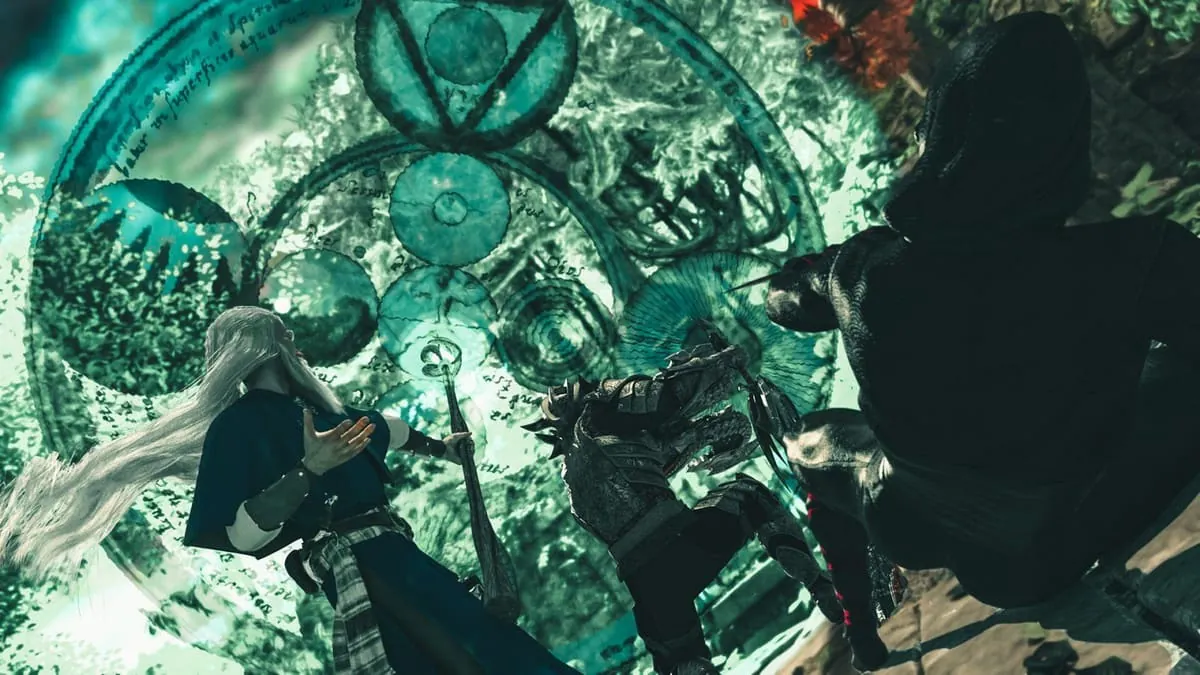
Seeking Closure
Play Seeking Closure
Seeking Closure Screenshots













Seeking Closure review
Exploring the narrative complexity, gameplay mechanics, and storytelling of this unique adult visual novel experience
Seeking Closure stands out as a distinctive visual novel that combines intricate narrative design with mature themes and complex gameplay mechanics. This game represents a specific niche within the visual novel community, offering players a multi-layered experience that demands engagement and replay value. Whether you’re curious about the game’s structure, its storytelling approach, or what makes it unique compared to other visual novels, this comprehensive guide explores every aspect of this compelling title. Understanding what Seeking Closure offers requires examining its mechanical innovations, thematic depth, and the way it leverages the visual novel format to create meaningful player choices.
Understanding Seeking Closure: Game Overview and Core Mechanics
So, you’ve clicked on a game called Seeking Closure. Maybe you’re a veteran of emotional, choice-driven narratives, or perhaps you’re just curious about what an adult visual novel experience that isn’t afraid of complexity looks like. 🕵️♂️ Wherever you’re coming from, let me tell you—this isn’t your typical dating sim. I remember booting it up for the first time, expecting a linear story with a few branching paths. What I got instead was a narrative labyrinth that demanded my attention, my memory, and my willingness to fail forward. It completely redefined my expectations for visual novel replay value.
Seeking Closure is a game about, well, seeking. But the closure you find is entirely dependent on the paths you walk, the questions you ask, and the time you’re willing to invest. It occupies a fascinating niche: a mature, psychological thriller wrapped in the framework of a romance VN, using its mechanics not just as a vehicle for the story, but as the very fabric of its themes. This chapter is your guide to understanding its brilliant, sometimes daunting, core design. Let’s unpack what makes it tick.
What Makes Seeking Closure a Unique Visual Novel Experience
At first glance, Seeking Closure might fit a familiar mold—beautiful art, compelling characters, a central mystery. But its uniqueness lies in how it weaponizes the standard tools of the genre to create something profoundly intricate. This is a game built for players who love to piece puzzles together, who find satisfaction in a system that remembers everything.
The most immediate differentiator is its commitment to a truly adult visual novel experience. And I don’t just mean the inclusion of mature romantic content (which is present and handled with narrative purpose). I mean it deals with adult themes: regret, the haunting nature of the past, the fragility of memory, and the difficult work of healing. The romantic conclusions in each route feel earned, a hard-won peace amidst emotional chaos, rather than a simple reward. 🧠
Furthermore, the game assumes intelligence and patience. There’s no hand-holding through its central mystery. The fully voiced dialogue—a fantastic feature that adds immense depth to character performances—often contains subtle clues. A hesitation in a voice, a change in musical cue, or a seemingly off-hand remark might be the key to unlocking a new possibility on your next loop. This design creates a uniquely engaging visual novel gameplay mechanics loop: listen, learn, reload, and apply. You become an active investigator within the story’s framework.
The Narrative Structure and Route System Explained
If you think of most visual novels as a tree with branches, Seeking Closure is more like a spider’s web where some threads are only visible from certain angles. Its narrative route system is the engine of its genius, and it’s deeply intertwined with its time loop storytelling.
The game presents you with a central cast and a fixed period of in-game time. Your choices determine which character’s perspective and story you primarily follow, leading to a specific route. However, hitting a “bad end” or even a standard ending isn’t a failure—it’s data collection. The game features accumulative routes visual novel design. This means completing a route, or even discovering a particular ending, permanently alters the state of your game. New dialogue options appear, characters might react to knowledge they shouldn’t have (and the game acknowledges this brilliantly), and entirely new pathways unlock.
Think of it like this: on your first playthrough, you might be locked out of a crucial conversation because you lack a specific piece of information. But once you learn that info in Route B, it becomes part of your collective “memory” for all subsequent playthroughs, allowing you to access Route C, which was previously invisible. This creates a powerful sense of progression and makes every playthrough meaningful.
To visualize how this intricate system works, let’s break down the primary route archetypes within the game:
| Route Type | Unlock Condition | Narrative Focus & Distinctive Mechanics |
|---|---|---|
| The “First Loop” Route | Available from the start. Typically the path of least resistance or a character you naturally gravitate towards. | Serves as the baseline narrative. Introduces core mysteries and characters but leaves major questions unanswered. Hints at deeper layers. Ending here feels intentionally incomplete. |
| The “Informed” Route | Requires specific knowledge gained from completing at least one other route. The game’s journal or memory system will reflect this. | Allows the protagonist to act on foreknowledge. New dialogue choices appear, often letting you circumvent previous obstacles or confront characters with shocking insight. This is where the time loop storytelling truly shines. |
| The “Synthesis” Route | Requires key pieces of information from multiple, sometimes all, other major routes. Often the “true” or final route. | Weaves together every narrative thread. Answers the central mystery and provides context for events in all other paths. Gameplay often changes, potentially offering unique mechanics or breaking the fourth wall. |
| The “Fallacy” or “Secret” Route | Unlocked by making a series of counter-intuitive or seemingly “wrong” choices across multiple playthroughs. | Explores alternate interpretations, “what-if” scenarios, or deconstructs the main narrative. Offers high reward for dedicated exploration and deep engagement with the visual novel choice system. |
This structure means there is no single “correct” order. The story reveals itself in layers, and your personal journey through the narrative route system becomes your unique version of the tale.
Gameplay Mechanics and Player Choice Architecture
Now, let’s get into the nuts and bolts. How do you actually interact with this web? The visual novel gameplay mechanics in Seeking Closure are elegantly designed to serve its complex story while respecting the player’s time and intelligence.
The heart of it all is the visual novel choice system. Choices are rarely simple “Be Nice/Be Mean” binaries. Instead, they often involve:
* What to ask: Prying into a sensitive subject might open a new branch or shut down a conversation entirely.
* Where to go: Your location determines who you meet and what clues you might find.
* What to remember: Sometimes, you’ll be prompted to recall a detail from a previous conversation or loop. This is where your real-world memory, aided by the game’s log, becomes a mechanic.
* When to intervene: Silence or inaction is itself a powerful choice with consequences.
Crucially, the game provides brilliant tools for navigation. The “skip” function isn’t just a fast-forward; it’s a “skip to next choice” or “skip unread text” lifeline for seasoned players. This is essential because visual novel replay value is built into the core loop. You are expected to replay. The game encourages it by making subsequent runs faster and more focused on the new choices you’ve unlocked.
A quick tip from my own experience: Use the “skip unread text” option on your second or third run. It lets you blaze through familiar scenes while automatically stopping at any new dialogue or choice that your accumulated progress has unlocked. It turns replaying from a chore into a thrilling treasure hunt. 🗺️
Now, let’s look at a concrete example of how this all comes together. Imagine a scene early on where you encounter a character, let’s call her Elara, who is visibly upset.
- First Playthrough (Route: Aiden): You have two choices: “Ask her what’s wrong” or “Give her some space.” Choosing to ask seems compassionate, but she shuts down, saying “It’s nothing,” and you learn no more. This path continues Aiden’s route.
- Second Playthrough (After learning a secret in Maya’s Route): You encounter Elara again. Now, because your game “remembers” you learned about Elara’s lost heirloom in Maya’s story, a third, bolded option appears: “Is this about the silver locket?” Choosing this shocks her, opens a deep, emotional conversation, and immediately diverges the path, potentially unlocking Elara’s own route or a hidden scene in your current one.
- The “Bad End” as Teacher: Perhaps in that first playthrough, you persistently choose the wrong topics with another character, leading to an early, negative ending. Instead of a simple “Game Over,” the screen might fade with a poignant line of narration, and then offer a brief, almost director’s commentary-style note: “Perhaps insisting on his father’s scandal closed his heart to you. Other approaches might yield a different result.” It’s feedback, not failure.
This example shows the accumulative routes visual novel design in action. Your actions in one playthrough directly enable new possibilities in another. The “bad ends” are not dead ends; they are lessons that make your next attempt richer. The time loop storytelling isn’t just a plot device; it’s a gameplay reality. You, the player, are accumulating knowledge and power with each cycle, just as the protagonist slowly might within the fiction.
This elegant visual novel choice system, combined with the expectation of multiple playthroughs, creates an unmatched sense of depth. You stop thinking in terms of “saving and reloading before a choice,” and start planning a long-term strategy for uncovering the truth. The soundtrack and audio cues also play a massive role in this, with specific themes becoming associated with breakthrough moments or tragic reveals, training your ear just as the game trains your eye for text cues.
In the end, Seeking Closure appeals to a specific, dedicated subset of visual novel enthusiasts: those who see the genre as an interactive puzzle box. Prior experience with non-linear stories or games that require note-taking is beneficial, but the most important qualification is a willingness to engage deeply, to loop back, and to understand that the first ending is never the whole story. It’s a game that rewards your investment tenfold, making you an active architect of its narrative resolution. 🏛️
Seeking Closure represents a sophisticated approach to visual novel design that rewards player engagement and multiple playthroughs. By combining intricate narrative structures with meaningful choice mechanics and time loop storytelling, the game creates an experience that extends far beyond a single playthrough. The accumulative route system ensures that each subsequent run reveals new layers of story and hidden content, encouraging players to systematically explore every possibility. The game’s design philosophy acknowledges that dedicated visual novel players will dissect every element of the experience, and it builds this expectation directly into its structure. For those interested in narrative-driven games with complex branching paths and mature themes, Seeking Closure offers a compelling experience that demonstrates the potential of the visual novel medium. If you’re considering diving into this game, approach it with the understanding that patience and multiple playthroughs are essential to fully appreciating what the developers have crafted.